Screen Printing or Sublimation: Which One Should You Choose?
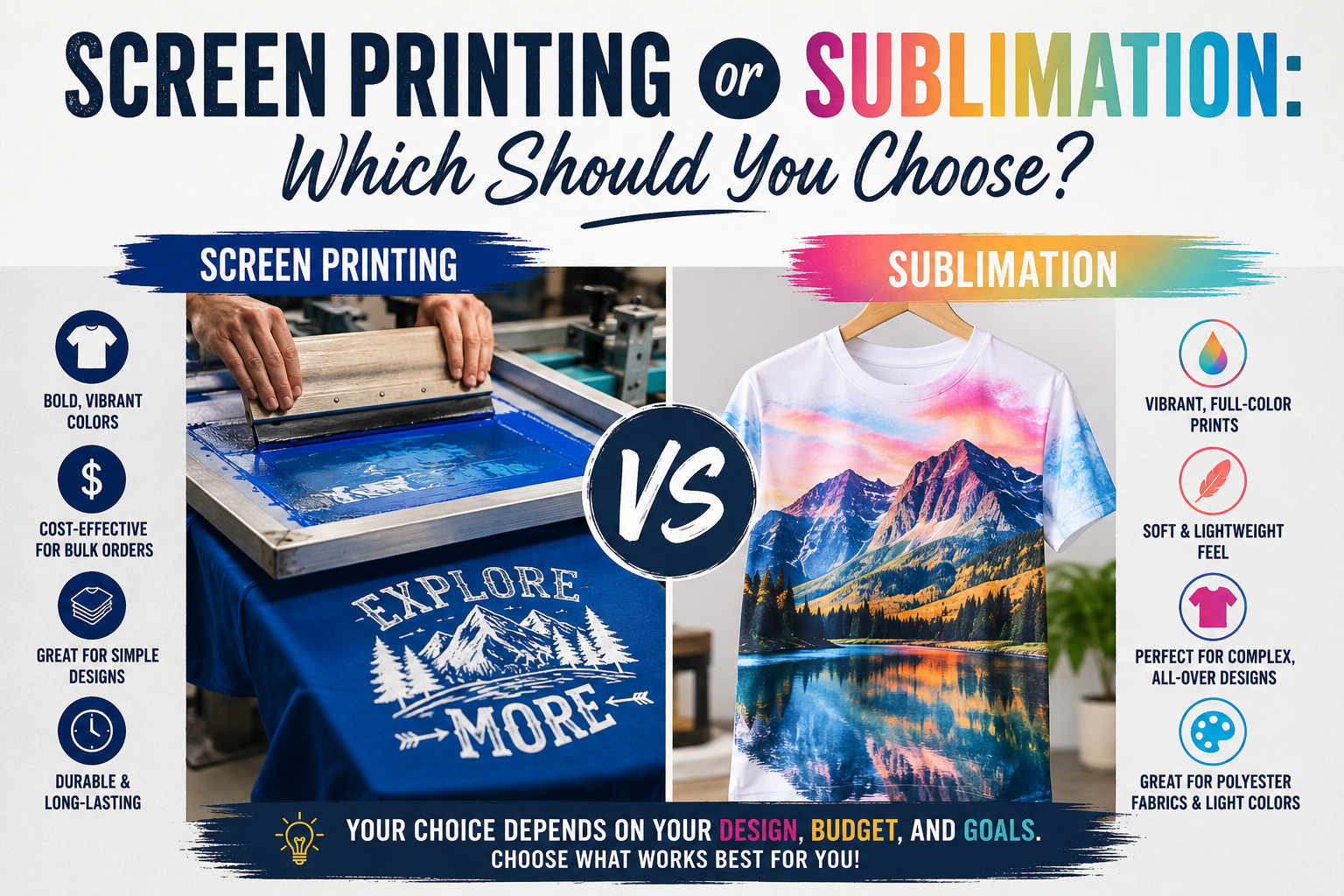
You may have designs ready but feel stuck choosing between screen printing and sublimation printing. Both methods are widely used, yet they work in very different ways.
The choice can affect print cost, durability, and design quality. Screen printing uses ink on the surface of fabric while sublimation bonds ink into polyester fibers. These differences can change how your final product looks and feels. Picking the wrong method may lead to results that do not match your goal.
This article breaks down each process in simple terms. It also compares cost, fabric use, and print style. You will see where each method works best. By the end, choosing the right option for your project becomes much easier.
What Is Screen Printing?
Screen printing is a printing method used to place ink on a surface. It uses a mesh screen and a stencil. The stencil controls where the ink goes. The method works on fabric, paper, plastic, and other flat items.
This printing method is often used for shirts, posters, and signs. It allows clear and strong color output. The design sits on top of the material instead of soaking in.
Screen printing works well for both simple shapes and detailed artwork. Each color is applied one layer at a time. This helps keep each part of the design clear.
How Screen Printing Works
Screen printing follows a clear set of steps. A mesh screen is prepared first. The screen is stretched tightly over a frame. A stencil is placed on the screen. The stencil blocks certain areas. Ink is placed on top of the screen. A tool called a squeegee spreads the ink across the surface. The ink passes through open areas of the stencil. The blocked areas stop the ink. Each color in a design needs a separate screen.
The same item moves through each screen for color layering. Careful alignment keeps the design in place. After printing, the item goes through drying. Heat or air is used to set the ink. This helps the design stay on the material for a long time. Different materials may need different ink types. Fabric inks are common for clothing. Plastic items often use special inks that stick better to smooth surfaces.
Advantages of Screen Printing
Screen printing creates strong and long-lasting prints. The ink sits on top of the material. This helps the design stay bright after many washes or uses. It works well for large orders. Once the screens are set, the same design can be printed many times. This makes it useful for bulk production.
Colors appear bold and solid. This makes it a good choice for logos and simple artwork. The result looks clean and easy to see. It also works on many surfaces. Fabric, wood, metal, and plastic can all be used. This gives it a wide range of uses in clothing, advertising, and product design.
Disadvantages of Screen Printing
Screen printing takes time to set up. Each color needs its own screen. This adds extra preparation work before printing starts. Small orders can cost more per item. The setup effort stays the same even for a few prints. This makes it less efficient for short runs.
Very detailed designs can be harder to print. Fine lines may not come out clearly. Color blending also has limits since each color is printed separately. Storage of screens can take space. Each design may need its own screen set. This can build up over time in a busy print shop.
What Is Sublimation Printing?
Sublimation printing is a method that places color into a surface using heat. The ink turns into gas under heat and bonds with the material. The design becomes part of the surface, not just a layer on top.
This method is often used on polyester fabrics and coated items like mugs or metal sheets. The result is a smooth finish with no raised texture.
How Sublimation Printing Works
Sublimation printing follows a clear production flow. Design creation happens first on a computer. The image is prepared in full color. It is then printed on special transfer paper using sublimation ink.
Heat and pressure are applied using a heat press. The ink changes from solid to gas during this stage. The gas moves into the material surface. The material cools down after heat exposure. The ink returns to a solid state inside the fibers or coating. The design becomes fixed inside the surface.
Advantages of Sublimation Printing
Sublimation printing gives strong color detail. Images appear sharp and smooth. The design does not crack or peel because it becomes part of the material. This helps the print last longer under normal use.
The surface stays soft. No extra layer sits on top of the material. This keeps fabric light and flexible. Color blending works well in this method. Gradients and photo-like images show clear detail.
Disadvantages of Sublimation Printing
This method works best on polyester or specially coated surfaces. Cotton and untreated materials do not hold the ink well. Color output depends on the base material. Dark surfaces do not show sublimation prints clearly because the process does not use white ink.
Large-scale production needs specific equipment like heat presses and sublimation printers. This limits flexibility in some production setups. The final result depends on correct temperature and pressure control. Small variations can affect color quality and sharpness.
Sublimation vs. Screen Printing: 15 Key Differences
The following are the 15 key differences between sublimation and screen printing techniques:
1. Print quality
Screen printing produces strong and vivid print results with solid color coverage. The ink sits on top of the fabric, which gives the design a bold and slightly raised look. It works well for simple designs such as logos, text, and shapes. It struggles more with high-detail images like photographs or designs with smooth gradients. Each layer of ink adds thickness, which can slightly change the feel of the fabric surface.
Sublimation printing produces smooth, detailed, and full-color prints. The ink turns into gas during heat transfer and bonds with the fabric fibers. This creates a flat surface with no raised texture. It supports detailed artwork, gradients, and photo-quality images with clear definition. The colors look integrated into the material instead of sitting on top.
2. Durability
Screen printing offers good durability for everyday use. The ink stays on the surface of the fabric instead of becoming part of it. Over time, repeated washing and heavy use can lead to fading, cracking, or peeling, especially on thicker prints with multiple layers. Durability also depends on ink type and curing quality during production.
Sublimation printing provides strong long-term durability on suitable materials. The design becomes part of the fabric structure, which helps it resist cracking, peeling, or fading. Washing does not easily damage the print because the color is embedded into the fibers. This makes it stable for long-term use, especially on polyester-based items.
3. Print complexity
Screen printing is better suited for simple and bold artwork. Each color requires a separate screen, which increases setup work for complex designs. Fine details, gradients, and photo-based images are harder to reproduce accurately. The process also depends on manual setup, which adds limits to precision in highly detailed work.
Sublimation printing supports highly complex designs with ease. It works directly from digital files, which allows detailed artwork, fine lines, and smooth gradients. Photo prints also transfer clearly onto the material. Since the process is digital, the complexity of the design does not increase production difficulty in the same way.
4. Number of colors and color blending
Screen printing uses one color per layer, which means each color must be printed separately. This increases time and setup effort when designs contain many colors. Color blending is often done manually or through mixing inks before printing. This can sometimes lead to small differences in color output between batches.
Sublimation printing uses a full-color process based on CMYK color mixing. It prints multiple colors in one pass using digital design files. Gradients and smooth transitions between colors appear more natural. Color accuracy depends on design calibration and printer settings, which help maintain consistency across prints.
5. Special effects
Screen printing supports a wide range of texture-based effects. Raised ink, puff prints, glitter, metallic finishes, and 3D effects can be added using specialty inks. These effects create a physical texture that can be felt on the fabric surface. This makes screen printing suitable for bold and decorative styles.
Sublimation printing does not support physical ink effects in the same way. The print remains flat and smooth on the surface. Any visual effects must be created in the digital design before printing. There is no added texture or raised finish after printing.
6. Fabrics and materials
Screen printing works on a wide range of fabrics, especially cotton. The ink adheres well to natural fibers and blended materials. It is commonly used for cotton t-shirts, hoodies, and fabric-based promotional items. The process is flexible for different garment types.
Sublimation printing works best on polyester-based materials and polymer-coated surfaces. It performs well on polyester blends, neoprene, spandex, and nylon. It can also be used on coated items like mugs, ceramic products, and coated metal surfaces. It does not work on cotton or natural fibers because the ink cannot bond with them.
7. Eco-friendliness
Screen printing often uses plastisol inks, which are not biodegradable. These inks can have a higher environmental impact depending on disposal and cleaning processes. Water-based inks are available and more eco-friendly, but they are not always used in every production setup. Excess ink use and cleanup can also contribute to waste.
Sublimation printing uses non-toxic ink and produces less material waste in small production runs. The process uses digital files, which reduces the need for physical screens and extra materials. On-demand production also helps reduce excess inventory and unused stock, which can lower waste levels in some cases.
8. Cost efficiency
Screen printing is more cost-effective for large orders. The setup cost is high at the beginning, but the cost per item decreases when printing in bulk. Small orders are less efficient because the setup time remains the same regardless of quantity. Each additional color also increases production effort and cost.
Sublimation printing is more cost-efficient for small orders and custom items. Each print uses a digital file and does not require separate setup for each design. The cost per item stays more stable across small runs. It also supports on-demand production, which helps avoid unnecessary stock.
9. Consistency
Screen printing can produce consistent results across large batches once the setup is complete. However, small variations can still occur between production runs due to ink mixing, pressure differences, or manual handling. Reusing screens helps maintain design consistency.
Sublimation printing offers strong consistency because each design is printed from a digital file. Every item follows the same data source, which reduces variation between prints. Proper calibration ensures stable color and detail across production batches.
10. Items required
Screen printing requires several physical tools. These include screens, ink, squeegees, stencils, and masking tape. Each color requires its own screen setup. The process also requires drying or curing equipment to finish the print properly.
Sublimation printing requires a digital setup and heat-based equipment. The main items include a sublimation printer, sublimation ink, transfer paper, design software, and a heat press. The design is created on a computer and transferred through heat and pressure.
11. Set-up time
Screen printing requires more setup time before production starts. Each color in the design needs a separate screen, which adds preparation steps. Aligning screens and preparing stencils takes time, especially for multi-color designs. The setup stage is often the longest part of the process.
Sublimation printing has a shorter setup process. A digital design is prepared and printed directly onto transfer paper. There are no physical screens to prepare. Once the design file is ready, production can begin quickly.
12. Costs
Screen printing has lower startup equipment options, especially for basic setups. However, professional setups require more investment in tools, inks, and screens. Costs increase with each additional color and complex design. Reorders also include setup costs again.
Sublimation printing requires higher initial investment. Equipment such as printers, heat presses, and inks can be costly. However, ongoing production does not require screens or repeated setup. Costs stay more stable for custom or small-batch work.
13. Quantity
Screen printing is best suited for large production runs. Bulk orders reduce cost per item and make the setup time worthwhile. Small orders are less practical because setup effort remains the same regardless of quantity.
Sublimation printing works well for small batches or single-item production. Each piece can be printed individually without major changes in setup. This makes it suitable for custom or personalized orders.
14. On-demand fulfillment
Screen printing is less suited for on-demand production. Each new order may require new setup steps, especially for different designs or colors. This slows down quick production for individual orders.
Sublimation printing supports on-demand workflows more effectively. Each design is printed as needed from a digital file. This allows individual items to be produced without large preparation work.
15. Upfront investment
Screen printing can start with lower-cost tools, especially for basic setups. Small-scale equipment is affordable, but professional production setups increase investment. Additional colors and advanced tools raise the overall startup cost.
Sublimation printing requires more specialized equipment from the beginning. A dedicated printer, heat press, inks, and software are needed before production starts. The initial cost is higher, but the system is designed for flexible and custom production work.
Read also: Which Is Better for Small Businesses: DTF or Sublimation Printing?
Sublimation vs. screen printing: which one is best for your business?
Two printing methods shape how custom products look, feel, and cost. Sublimation and screen printing follow very different production paths. Each one fits a different type of business model. The right choice depends on product type, order size, and material needs.
Sublimation works by turning ink into gas and bonding it with polyester surfaces. The design becomes part of the fabric. Screen printing pushes ink through a mesh screen onto the product. The design sits on top of the material in layers. These differences affect production speed, fabric choice, and pricing. They also shape how flexible a business can be with product variety.
Sublimation printing: is it for you?
Sublimation printing fits businesses that focus on custom, full-color designs. It works best for products made with polyester or polymer-coated surfaces. Items like jerseys, mugs, phone cases, and polyester apparel often use this method. Designs come out smooth and detailed. There is no heavy ink layer on top of the fabric. The print becomes part of the surface. This gives a soft feel on clothing and strong color clarity.
Print-on-demand setups often match well with sublimation. Each item can be made one at a time without long setup work. This supports businesses that offer many design options and small order sizes. Dropshipping models also connect well with this method. Products can be produced as orders come in, which reduces storage needs.
Sublimation does not work on all fabrics. Cotton does not hold the ink well. Polyester-rich materials give the best results. Product selection must match this limit. Large solid color designs can sometimes show slight fading compared to other methods. This matters for brands that focus on bold, simple graphics.
Screen printing: is it for you?
Screen printing works best for bulk production. It uses one screen per color. Each layer is applied separately. This process takes more setup time but becomes efficient for large orders. Businesses that sell the same design in high volume often rely on screen printing. Apparel brands, event merchandise, and team uniforms often use this method. The ink layer sits on top of the fabric. This creates strong, bold prints. Simple designs with fewer colors work best. The finish is durable and holds up well through repeated washing.
Screen printing does not fit small, one-off orders. Setup time makes low-quantity runs less practical. Design changes also require new screens, which adds cost and time. Cotton fabric works very well with screen printing. It absorbs ink well and gives a solid finish. Polyester can also be used, but results may vary based on ink type. This method supports cost control at scale. Larger batches reduce the cost per item. That makes it suitable for businesses focused on wholesale or steady bulk sales.
Sublimation or screen printing?
The choice comes down to business style and product goals. Sublimation supports flexible production and wide design variety. It fits custom items, small batches, and product catalogs with many options. It depends on polyester-based materials and works best with detailed, full-color artwork.
Screen printing supports volume-driven sales. It works well for simple designs repeated in large quantities. It performs best on cotton and similar fabrics. It becomes more cost efficient as order size grows. Each method supports a different direction. One focuses on variety and customization. The other focuses on scale and consistency.
Which Printing Method Is More Durable?
Screen printing uses thick ink on the surface of the fabric. This layer can stay strong for a long time. It may crack or fade after many washes. It works well on cotton and heavy fabrics.
Sublimation uses dye that goes into the fabric. The color becomes part of the material. It does not peel or crack. It stays bright for a long time. It works best on polyester and light-colored items. Both methods can last a long time. The fabric type and care make a big difference. Screen printing gives strong prints on certain fabrics. Sublimation keeps colors locked into the material.
Which Option Is More Cost-Effective?
Cost matters a lot when choosing a printing method. Screen printing and sublimation both have different pricing styles. Screen printing usually costs less for large orders. The setup takes time at the start. After that, each shirt becomes cheaper to produce as the order grows. This works well for bulk runs like team shirts or event apparel.
Sublimation has a different cost pattern. It does not need heavy setup work. Small orders are easy to handle. The cost per item stays more steady. It can feel higher for big batches, but it works better for short runs or one-off designs. Material also changes the price. Screen printing works on many fabric types. Sublimation works best on polyester or coated fabrics. That can affect your total cost depending on your product choice. Order size and fabric type usually decide which option saves more money
Common Mistakes to Avoid
Choosing the Wrong Fabric: Fabric choice affects print results. Screen printing works well on cotton and cotton blends. Sublimation works best on polyester. Wrong pairing leads to poor color quality and weak prints. The final design may look faded or uneven.
Ignoring Order Quantity: Order size changes cost and process. Screen printing fits large batches better. Sublimation suits smaller runs or custom pieces. Wrong planning around quantity can lead to higher cost or wasted materials.
Using Low-Resolution Artwork: Image quality affects the final print. Low-resolution files create blurry and unclear designs. Sharp and clean artwork produces better results on both screen printing and sublimation.
Final Verdict
Screen printing and sublimation both deliver strong results. They do it in different ways. Each method fits a different goal. Screen printing works best for bulk orders. It gives bold and solid prints. It holds up well on cotton and heavy fabrics. The setup takes time, but the cost per item drops with large runs. Simple designs with fewer colors work best here.
Sublimation works best for custom and small orders. It prints full color designs with fine detail. The ink becomes part of polyester or coated surfaces. The print feels smooth and does not peel. It is not suitable for cotton or dark fabrics. The choice depends on your product and order size. Screen printing fits scale and simple artwork. Sublimation fits detail and flexible production. Both methods can last long when matched with the right fabric and care.
FAQs:
What’s the difference between sublimation and screen print?
Sublimation uses heat to turn ink into gas so it bonds with fabric fibers. Screen printing pushes ink through a mesh screen onto the surface of the shirt. Sublimation becomes part of the fabric, while screen print sits on top of it.
Is sublimation better than screen printing?
It depends on the project. Sublimation works best for bright, full-color designs on polyester shirts. Screen printing is often better for simple designs and large orders.
What are sublimation shirts?
Sublimation shirts are made for sublimation printing. They are usually polyester or a polyester blend. These shirts help the ink bond well with the fabric.
What shirts are best for sublimation?
Polyester shirts work best for sublimation. The higher the polyester content, the better the print quality. Light-colored shirts also give the best results.
Can you sublimate on dark colors?
Sublimation does not show well on dark fabrics. The ink is transparent, so dark colors block the design. Light fabrics give clear and bright results.
What’s a sublimation design?
A sublimation design is a digital image printed with special ink for heat transfer. The heat turns the ink into gas and locks it into the fabric. This creates a smooth, long-lasting print.
Do you need a heat press for screen printing?
A heat press is not required for screen printing itself. Screen printing uses ink and screens to apply the design. A heat press may be used after printing to help cure the ink.
What does sublimated mean in clothing?
Sublimated clothing means the design is infused into the fabric. The ink becomes part of the fibers instead of sitting on top. This helps the design feel smooth to the touch.
How long does screen printing last?
Screen printing can last for years with proper care. The print may stay strong even after many washes. Washing in cold water helps it last longer.
Does sublimation last as long as screen printing?
Sublimation and screen printing both last a long time. Sublimation does not crack or peel because it becomes part of the fabric. Screen printing is very durable but can wear down over time.
What are the disadvantages of sublimation printing?
Sublimation only works on polyester fabrics. It also does not show well on dark colors. The setup cost can be higher for small batches.
Can Sublimation Be Used on Cotton?
Sublimation does not work well on cotton. The ink needs polyester fibers to bond properly. Cotton shirts will not hold the design in the same way.
Which Printing Method Lasts Longer?
Both methods are long-lasting when done correctly. Sublimation can last longer on polyester because it becomes part of the fabric. Screen printing also lasts well but may fade or crack over time.
What Is Best for Small Businesses?
Small businesses often choose based on product type and order size. Screen printing works well for bulk orders with simple designs. Sublimation is better for small runs with full-color artwork.