How to Preserve Pet Memories with 16 Shadow Box Ideas
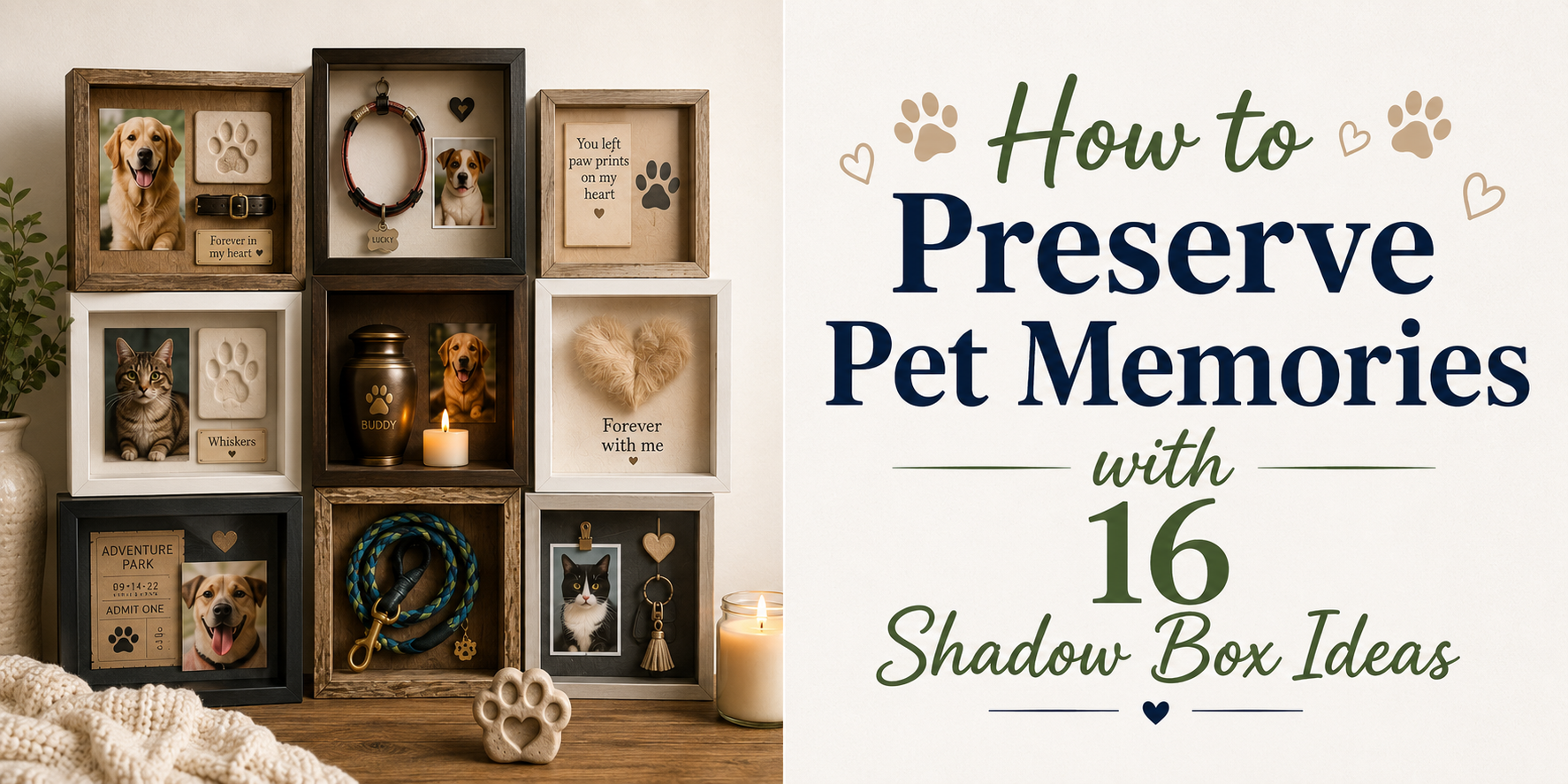
Saying goodbye to a beloved pet leaves many people with memories they want to keep close. Photos alone may not feel like enough. Small keepsakes often end up tucked away in a drawer or box. That can make those special moments feel farther away. Still, there is a simple way to keep those memories part of your daily life. A pet shadow box gives treasured items a special place. This guide explains what a pet shadow box is, why many people create one, and how to make it step by step. You will also find creative shadow box ideas, helpful tips, common mistakes to avoid, and answers to common questions.
What Is a Pet Shadow Box?
A pet shadow box is a display frame that holds special items from your pet's life. It helps keep happy memories in one place. Many people make one after a pet passes away. Others create one while their pet is still with them.
A shadow box has more depth than a regular picture frame. That extra space lets you place small keepsakes inside. You can add a favorite photo, a collar, an ID tag, a paw print, or a small toy. Some people also include a nameplate or a short note. Each shadow box tells a personal story. Every item has a memory behind it. Looking at those keepsakes can bring comfort and help you remember the good times you shared with your pet.
Why Create a Shadow Box for a Beloved Pet?
A pet brings joy, comfort, and love into your life. Their favorite toy, collar, tag, or photo holds special meaning. A shadow box gives those keepsakes one safe place. It helps you keep happy memories close every day. A shadow box also tells your pet's story. Each item reminds you of fun moments, quiet days, and the bond you shared. Every time you see it, those memories come back in a simple and personal way.
This display can also bring comfort. Many people find peace in creating something with care after saying goodbye to a pet. It becomes a lasting tribute that shows love and respect. You can place the shadow box in your living room, bedroom, or another special spot. It blends with your home while keeping your pet's memory alive. Over time, it becomes a meaningful piece that family and friends can also enjoy.
How to Make a Shadow Box for a Pet
A pet shadow box keeps memories in one place. It holds items that bring back moments with your pet. Each piece adds meaning to the final display.
Choose a Shadow Box
Pick a shadow box that matches the items you want to use. A deeper frame works better for collars, tags, or small toys. A shallow frame fits flat items like photos or paper prints. Check the frame strength before you begin. A strong back panel helps hold everything in place. Clear glass or acrylic front panels keep the items visible and protected from dust. Think about size early. A small box can feel tight with too many items. A larger box gives more space to arrange things without overlap.
Gather Meaningful Items
Collect items that connect to your pet’s life. Photos often become the main focus. A collar or tag adds a strong personal link. A paw print can bring extra meaning. Small toys or a favorite blanket piece can also fit well. Pick items that feel important, not just many items. Too many objects can make the box look crowded. A few strong pieces often tell the story better. Lay everything out on a table. This helps you see what you have before building the design.
Plan the Layout
Place all items inside the box without attaching them first. Move them around to test different positions. Try different arrangements until the layout feels balanced. Put larger items toward the back. Smaller items work well near the front or sides. Leave some open space so the box does not feel packed. Check how each item looks through the glass. Some positions may hide details, so adjust until each piece is clear and visible.
Secure the Items
Attach each item one at a time. Use safe adhesive or small pins based on the material. Light items may need only small glue dots. Heavier items may need stronger support. Press each piece firmly so it stays in place. Give extra attention to corners and edges. These areas often loosen over time. Double-check stability before moving to the next item. A steady layout keeps the display safe for long-term use.
Add Personal Touches
Include your pet’s name to make the box more personal. A small printed label or handwritten card can work well. Add a date or short phrase that marks a memory. Background paper or fabric can change the look of the box. Soft colors can create a calm feel. Brighter tones can highlight the items inside. Small decorations can also fit, such as shapes, stickers, or simple art that connects to your pet’s personality.
Seal the Box and Display
Close the frame once all items are set in place. Make sure nothing shifts before sealing. Press the back panel tightly so it stays secure. Clean the front glass to remove dust or marks. A clear surface helps the items stand out. Place the shadow box where it stays safe and visible. A wall spot or shelf at eye level works well. Keep it away from moisture or direct heat to protect the items inside.
Read also: How to Make a DIY Shadow Box Frame
Pet Memorial Shadow Box Ideas
Shadow boxes give a way to hold pet memories in one place. Many people use them to keep small items that remind them of their pet. Each box can tell a personal story.
Here are 15 ideas for a pet memorial shadow box.
1. Create a Dog Collar Shadow Box
A collar can sit in the center of the box. It often becomes the main focus right away. ID tags can hang next to it for detail. A nameplate can sit below the collar with clear text. A short message can go under the name. Soft paper or fabric on the back can set a calm tone. Many people choose colors that match their pet’s look or personality. Small pins or hooks help hold everything in place.
2. Display a Paw Print in Your Shadow Box
A paw print can hold deep meaning in a simple form. Clay prints or ink prints both work well. The print can sit in the center of the frame. A photo next to it adds a clear memory link. A clean background helps the print stand out. Small shapes like hearts or paws can fill empty space. A short line of text can sit under the print to mark the memory. The full setup feels personal and steady.
3. Include a Favorite Toy
A favorite toy can bring back daily moments of play. It can sit next to a photo from happy times. Small toys fit well inside most shadow boxes. Soft toys can be shaped or adjusted for display. A small label can name the toy or describe the moment. Some people place the toy in a resting position for a calm look. The goal is to keep a memory of fun and comfort.
4. Create a Rainbow Bridge Tribute
A soft rainbow background can guide the design. Photos and keepsakes can sit across the space. Light colors help keep the display calm and steady. Cloud shapes or wing shapes can be added for detail. A short message can sit near the center of the box. Items like a collar or tag can support the theme. The layout often brings a peaceful feeling to the display.
5. Preserve a Lock of Fur or a Whisker
A small lock of fur or a whisker can be stored in a tiny vial. The vial can sit next to a photo or nameplate. A small envelope can also be used for storage. A short note can describe the memory behind the item. Some people place it near a collar or tag for balance. The display stays small but holds strong meaning. Each detail adds a close connection to the pet.
6. Add a Handwritten Letter or Note
A handwritten note can hold personal words and memories. It can be folded and placed inside the box. Some people frame the note so the writing shows clearly. A photo or charm can sit beside the note. Simple decorations can frame the space without clutter. The words inside the note often carry the most meaning. This part of the box feels direct and personal.
7. Incorporate a Leash and Walking Memories
A leash can be folded and placed inside the shadow box. It often connects to daily walks and routines. Photos from parks or streets can sit nearby. A small map can show common walking routes. A tag can mark a favorite place or time. The layout can stay simple with clear spacing. Each item points back to shared time outside.
8. Personalize It With a Nameplate and Dates
A nameplate can sit at the top or center of the box. It shows the pet’s name in clear letters. Dates can be added under the name. A fabric or paper background can sit behind it. A photo or paw print can sit near the nameplate. Small spacing keeps the design easy to read. This setup gives a clear identity to the tribute.
9. Create a Photo Collage of Special Moments
Small photos can show different times in a pet’s life. Each photo can sit in a neat row or soft pattern. Captions can sit under each image. The captions can name simple moments like play or rest. Small decorations can fill gaps between photos. The layout can move from early life to later years. The full collage shows a full memory story.
10. Collar and ID Tag Memory Display
A collar and ID tag can sit side by side. The tag can hang slightly for a natural look. A photo can sit behind or next to the items. A plain background helps the items stand out. A small label can name the pet clearly. The layout stays simple and focused. This setup keeps daily items as the main memory.
11. Paw Print Impression Keepsake Box
A paw print impression can sit in the center of the frame. Clay or plaster prints work best for this display. A nameplate can sit below the print. A photo can sit beside it for balance. A soft border can frame the full setup. Simple spacing helps each item stand out. The print becomes the main focus of the box.
12. Favorite Toy Memory Arrangement
A favorite toy can sit as the main item in this design. It can rest in the center or one side of the box. A photo from playtime can sit nearby. A short note can describe the toy’s meaning. The background can stay soft and simple. Space around the toy keeps attention on it. This design highlights joyful moments.
13. Rainbow Bridge Photo and Quote Box
A photo can sit in the center as the main focus. A short quote can be placed near it. Soft colors can fill the background area. Small shapes like hearts or clouds can add detail. A collar or tag can sit near the photo. The layout stays calm and balanced. The message and photo work together.
14. Adventure and Walk Route Memory Box
Photos from walks and trips can fill the box. A printed map can show paths taken together. Small labels can mark places of meaning. A leash or tag can sit along the side. Each item shows part of shared outdoor time. The layout can stay spread out for clarity. This box tells a story of movement and time together.
15. Mixed Keepsake Tribute Shadow Box
Different keepsakes can sit together in one box. Items like a collar, toy, photo, and note can be included. Each item can be spaced for a clean look. A soft background helps all pieces stand out. Small labels can mark each item. The full setup shows many parts of life together. It becomes a complete memory display.
16. Mixed Keepsake Memory Collage Box
Photos and keepsakes can be arranged in a collage style. Items can include small toys, tags, and notes. Each piece can sit in its own space. A balanced layout helps avoid clutter. Name details can be added in small sections. The design can move across the box in a gentle flow. The final display brings many memories into one place.
Read also: How to Create a Keepsake Wedding Shadow Box
Tips for Creating a Beautiful Pet Shadow Box
A pet shadow box becomes more meaningful when every item has a clear purpose. A thoughtful layout helps your keepsakes tell a personal story while keeping the display neat and balanced.
Focus on a Single Theme
Start with one clear idea for your shadow box. You might celebrate your pet's puppy or kitten years, favorite outdoor adventures, special milestones, or the bond you shared throughout their life. A single theme keeps every item connected, making the finished display feel more personal instead of crowded.
Use High-Quality Photos
Photos often become the centerpiece of a pet shadow box, so choose images that are clear and well-lit. Pick pictures that capture your pet's personality, whether it is a playful moment, a peaceful nap, or a favorite activity. Printing photos on quality paper also helps them stay vibrant for years.
Create Depth With Layered Elements
A shadow box has extra space that allows you to build visual interest. Place larger items toward the back, then arrange smaller keepsakes in front. You can raise certain pieces with foam adhesive or display cards at different heights to give the arrangement a more natural look without making it feel cluttered.
Choose Colors That Complement the Keepsakes
The background and decorative accents should support your keepsakes rather than compete with them. Neutral shades often help colorful collars, tags, and photos stand out. Soft colors can also create a calm, balanced appearance that keeps the attention on the memories inside the frame.
Protect Delicate or Fragile Items
Many pet keepsakes have sentimental value and cannot be replaced. Secure lightweight items with acid-free adhesive or mounting strips designed for display projects. Keep delicate objects away from direct sunlight and moisture to help reduce fading, discoloration, or damage over time.
Common Mistakes to Avoid When Making a Pet Shadow Box
A pet shadow box should tell a simple story. Too many items or a poor layout can make it feel messy. A few smart choices help your keepsake look neat and last for years.
Overcrowding the Display
It is easy to add every special item. Still, too many pieces can make the display look busy. Leave some open space between items. This helps each piece stand out. A clean layout also makes the shadow box easier to enjoy.
Using Too Many Unrelated Items
Pick items that share a clear connection with your pet. Favorite toys, a collar, a name tag, or a photo work well together. Random objects can distract from the memory you want to keep. Each item should have a reason to be there.
Choosing a Shadow Box That Is Too Small
A small shadow box can make everything feel cramped. Items may overlap or press against the glass. Pick a size that gives each piece enough room. The finished display will look balanced and easier to view.
Ignoring Long-Term Preservation
Many keepsakes need gentle care. Clean each item before placing it inside the box. Keep the shadow box away from direct sunlight and damp areas. This helps protect photos, fabric, paper, and other special pieces from damage over time.
Forgetting a Clear Focal Point
Every shadow box needs one main item that catches the eye first. It could be a favorite photo, a collar, or a paw print. Place that item near the center or in a spot that stands out. Then arrange the other pieces around it. This gives the display a clear and pleasing look.
Final Verdict
A pet shadow box gives a simple way to keep pet memories in one place. It brings together items like photos, collars, tags, toys, and small notes. Each item carries a moment from a shared life. A display like this helps those memories stay close instead of being stored away.
Building a shadow box also helps shape a clear story. It turns loose keepsakes into a single display that feels organized and meaningful. Many people place it in a living room or bedroom so the memory stays part of daily life. It can also bring comfort through familiar objects and images that reflect time spent together.
A strong result comes from simple choices. A clear theme works better than random items. Open space helps each piece stand out. A single main item keeps the focus steady. Careful placement also helps protect the items over time and keeps the display neat. A pet shadow box is more than a craft project. It becomes a lasting display of shared moments and personal memories.
FAQs
1. What is a pet shadow box?
A pet shadow box is a display frame that holds keepsakes from a pet’s life. It can include photos, tags, toys, or small items. It keeps memories in one place so they stay easy to see and remember.
2. Why do people make a pet shadow box?
People make a shadow box to hold memories of a pet in one display. It helps keep items like collars, photos, and toys together. It also brings comfort through familiar objects and shared moments.
3. What items can go inside a pet shadow box?
Common items include a collar, ID tag, paw print, photos, and small toys. Some people add notes or nameplates too. Each item shows a part of the pet’s life and story.
4. How do you make a pet shadow box?
Start with a shadow box frame that fits your items. Place keepsakes inside before attaching anything. Adjust the layout until it looks clear. Then secure each item and close the frame.
5. What size shadow box should I choose?
A deeper frame works better for collars and toys. A shallow frame fits flat items like photos. A box that is too small can feel crowded and hard to arrange.
6. How should items be arranged inside the box?
Larger items usually go in the back. Smaller items fit better in front or on the sides. Some space between items helps each piece stand out clearly.
7. How do you keep items safe inside a shadow box?
Clean each item before placing it inside. Use safe adhesive for light items and stronger support for heavier ones. Keep the box away from sunlight and moisture to protect the keepsakes.
8. What mistakes should be avoided?
Do not add too many items, since it can look crowded. Avoid mixing unrelated objects. A clear focal point helps the display stay balanced and easy to view.