Which Is Better for Small Businesses: DTF or Sublimation Printing?
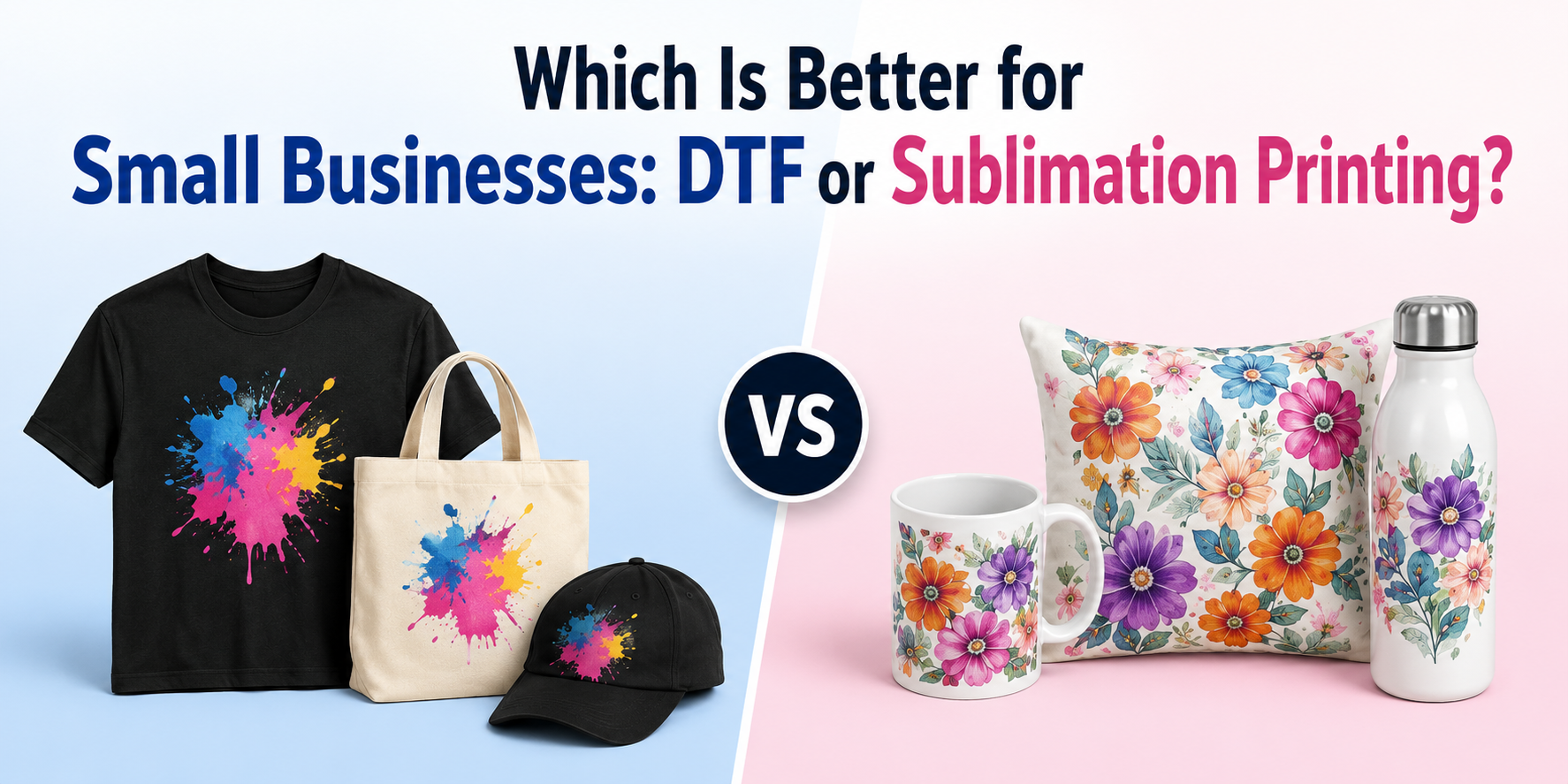
Small businesses often struggle to choose between DTF printing and sublimation printing. One wrong choice can lead to wasted money, limited product options, and weak print results. This makes the decision harder for owners who need consistent quality and low costs for daily orders too. Still, this choice does not have to feel confusing.
This article breaks down both methods in simple terms and shows how each one works for small business needs. It helps you compare results, costs, and the best products for each printing method. You will see where DTF fits better and where sublimation fits better so you can choose with more clarity for your shop and avoid common mistakes.
What Is DTF Printing?
DTF printing stands for Direct to Film printing. It is a printing method that moves a design from a film sheet onto fabric. The design is first printed on a clear film using special ink.
Next comes a fine powder layer. This powder sticks to the wet ink. Heat is then used to melt the powder. The design is pressed onto fabric using a heat press machine. The result is a printed image bonded to the material. This method works on many fabric types. It also keeps colors bright and clear after washing.
Common materials used with DTF printing:
- Cotton shirts
- Polyester fabric
- Cotton and polyester blends
- Tote bags
- Hoodies
DTF printing is used for custom clothing, small business orders, and printed merchandise. It supports both simple and detailed designs. Supplies for DTF printing can be ordered from an external supplier link found on product pages that sell printing equipment and materials.
Basic tools and equipment needed:
- DTF printer
- PET film sheets
- DTF ink set
- Adhesive powder
- Heat press machine
- Design software for artwork creation
What Is Sublimation Printing?
Sublimation printing is a method of transferring ink into a material using heat. The ink turns into gas under high heat. It bonds with the surface instead of sitting on top. This process creates a permanent print that becomes part of the material. It is commonly used on polyester fabric and coated items like mugs, phone cases, and metal plates.
What You Need for Sublimation Printing
- Sublimation printer
- Sublimation ink
- Heat press machine
- Polyester fabric or coated blanks
- Heat resistant paper
- Computer with design software
Each item plays a role in the process. The printer holds the special ink. The heat press applies pressure and heat. The material must accept the ink for proper results.
It only works on polyester or coated surfaces. Cotton fabrics do not hold the ink well. Light-colored materials work best. Dark surfaces block the design from showing clearly. Special equipment is required. The setup costs more than basic printing methods. Large designs require careful alignment. Small mistakes can affect the final result.
DTF vs Sublimation Printing
DTF and sublimation are two popular printing methods for small businesses. Each one works in a different way and fits different needs. The right choice depends on fabric type, color needs, and production style.
Below is a simple comparison of both methods.
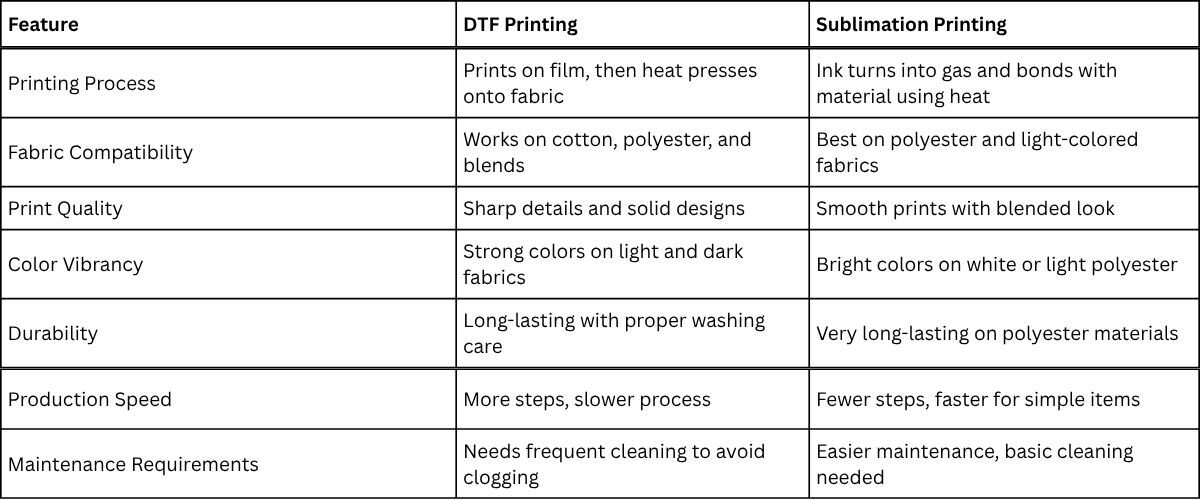
DTF gives more flexibility with fabric choices. Sublimation works best when you focus on polyester products. Both methods can support a small business. The right pick depends on the products you plan to sell.
Startup Cost Comparison
DTF and sublimation printing start with different budget levels. The main difference comes from equipment and setup needs.
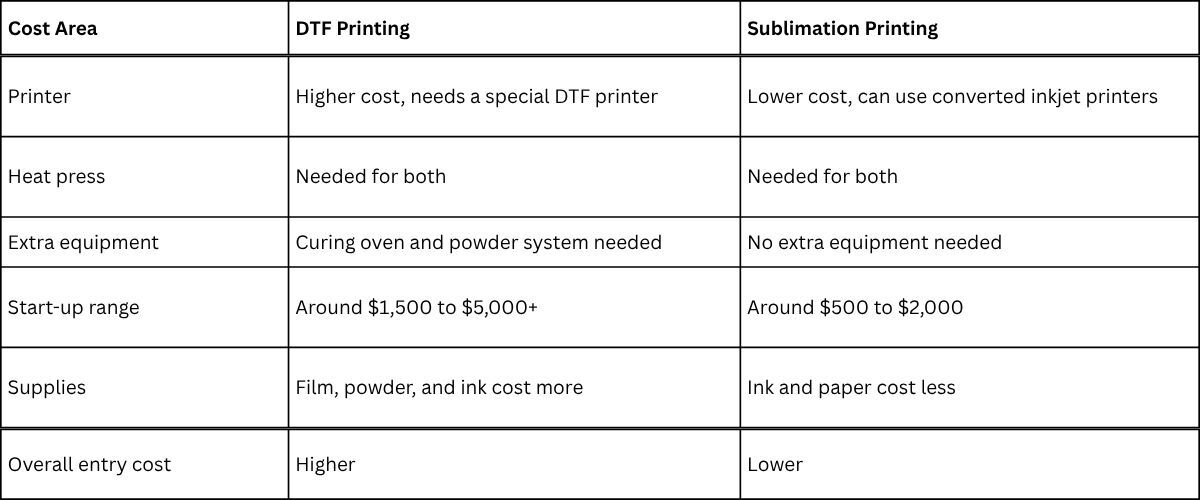
DTF needs more tools, so the first setup costs more. Sublimation starts smaller and feels easier on the budget.
Best Products for DTF Printing
DTF printing works on many fabric items. It fits small business needs because it handles both small and large orders. It also works on different materials without much change in setup. This makes it useful for product variety and custom orders.
T-Shirts
Cotton t-shirts are a common choice for DTF printing. The print shows clear detail and strong color. It works on light and dark shirts. Many sellers use t-shirts for daily sales because demand stays steady.
Hoodies
Hoodies give more space for larger designs. DTF prints stay firm on thick fabric. The design keeps its look after many washes. Cotton and cotton blends are often used for better results.
Tote Bags
Tote bags are simple but popular items. DTF printing works well on canvas. Logos and short messages print clearly. These bags are often used for shops, events, and gifts.
Workwear
Workwear needs strong prints that last. DTF holds up on uniforms and jackets. It stays clear even with regular washing. Many businesses use it for staff clothing and branding.
Best Products for Sublimation Printing
Sublimation printing works on items with a special coating or polyester base. The print becomes part of the surface. Colors stay bright. The design does not peel.
Mugs are a common choice for sublimation printing. They have a coated surface that holds color well. Text and images look sharp on curved surfaces. These are used for gifts and daily drinkware.
Tumblers support full-wrap designs. The surface area is larger than mugs. This allows more space for artwork or branding. They are used for cold and hot drinks. The print stays smooth and clear after use.
Phone Cases
Phone cases made for sublimation have a printable back layer. This allows detailed designs and photos. The print covers the case surface. The result looks clean and consistent. These are popular for custom designs.
Polyester Apparel
Polyester apparel works well with sublimation printing. The ink bonds with the fabric fibers. Shirts, jerseys, and activewear are common items. The print feels light on the fabric. The design stays part of the material.
Advantages of DTF Printing
DTF printing works on many types of fabric. It can be used on cotton, polyester, and fabric blends. This gives more choices for small business orders. Colors look bright and clear on the final print. Designs can show fine details like small text and thin lines.
DTF printing works well for both small and large orders. It does not need large setup changes between jobs. This helps save time during production. The prints stay strong after many washes. The design does not fade quickly with normal care. DTF also works for simple and detailed designs. This makes it useful for different customer needs.
Advantages of Sublimation Printing
Sublimation printing creates bright and clear designs. The colors stay strong and sharp over time. This makes it a good choice for many small businesses. First, the prints last a long time. The ink becomes part of the fabric. It does not sit on top. This helps prevent fading and peeling. Another point is the color quality. Images look bold and smooth. Gradients and photos come out very clean. This works well for detailed designs.
Also, the fabric feels soft. There is no heavy layer on the surface. The material stays light and comfortable to wear. Sublimation works best on polyester fabrics. It also works well on coated items like mugs and metal sheets. This gives more product options for a business. Production stays simple and clean. There is no extra ink layer or thick texture. The process stays steady once it is set up.
Limitations of DTF Printing
DTF printing works well for many small businesses. It also comes with limits that matter in daily use. The process needs special film and powder. That adds extra steps before the design is ready. This can slow down work during busy orders. The feel of the print can be thicker on fabric. Some customers prefer a softer print. This can affect customer satisfaction for certain products.
Heat pressing is required for every item. The wrong heat or pressure can cause poor results. This means more care is needed during production. Wash durability can vary based on materials and application. Some prints may crack or fade over time if not handled properly. The equipment and supplies also need space and regular upkeep. This can be a challenge for very small setups with limited room.
Limitations of Sublimation Printing
Sublimation printing works best on polyester fabric. Cotton does not hold the ink well. This limits fabric choices for many small businesses. The process only works on light colored materials. Dark fabric does not show the design clearly. This reduces design options for different products. White ink is not part of sublimation printing. Any white area in a design stays the same color as the fabric. This affects how some artwork looks after printing.
The ink bonds with polyester coating or polyester fibers. Other materials like wood or metal need a special coating. Without it, the print quality drops. Heat is needed to transfer the design. A heat press becomes part of the setup. This adds another tool to manage in production. Sublimation also does not work well for mixed fabric types. Blended materials can change how colors appear. This leads to results that may not match the original design.
Which Printing Method Is Best for Beginners?
Starting a small printing business brings many choices. DTF and sublimation often come up first. Both methods can produce good results, but they work in different ways. DTF printing uses a film. The design is printed on the film, then heat is used to transfer it onto fabric. It works on many fabric types like cotton, polyester, and blends. This makes it easier to test different products without changing setups.
Sublimation printing works in a different way. The ink turns into gas under heat and bonds with polyester materials. It works best on light-colored polyester fabrics and coated items like mugs or phone cases. It does not work well on cotton. For beginners, flexibility matters a lot. DTF offers more room to experiment with different materials. That helps new sellers test ideas without limits on fabric type.
Sublimation fits best when the focus stays on polyester products. It also produces smooth, long-lasting prints, but material choice stays limited. Both methods have learning curves, but DTF often feels easier for new users who want variety from the start.
How to Choose the Right Printing Method for Your Business
Picking a printing method affects your product quality and cost. It also shapes what you can sell and how you work each day. DTF and sublimation both help small businesses, but they work in different ways.
Choose DTF If
DTF works well for many fabric types. It can print on cotton, polyester, and mixed fabrics. This helps you offer more product options. It fits designs with strong colors. The prints stay clear on dark and light shirts. It works for small and large orders. You can print one item or many items without changing the setup much. It supports detailed artwork. Small lines and fine details stay sharp on fabric.
Choose Sublimation If
Sublimation works best on polyester fabrics. It bonds with the fabric, so the design becomes part of the material. It fits light-colored products. The colors show best on white or very light surfaces. It works well for all-over prints. Designs can cover large areas like shirts, mugs, and bags. It gives a smooth feel. The print does not sit on top of the fabric, so the surface stays soft.
Final verdict
DTF printing gives more freedom for small businesses. It works on cotton, polyester, and fabric blends. It handles dark and light shirts. It fits custom clothing, tote bags, hoodies, and workwear. It supports many product types in one setup. This helps shops that take mixed orders every day.
Sublimation printing fits a different path. It works best on polyester fabric and coated items. It delivers smooth prints with bright color. It suits mugs, tumblers, phone cases, and light polyester shirts. The print becomes part of the surface, so it feels soft and clean.
Both methods support strong business use. DTF brings wider product options and flexible fabric use. Sublimation brings smooth results on specific materials with clean color quality. A shop focused on variety leans toward DTF. A shop focused on polyester goods and hard surface products leans toward sublimation.
FAQs:
What is DTF printing used for?
DTF printing is used for custom clothing and fabric items. It works on cotton, polyester, and blends. It fits t-shirts, hoodies, tote bags, and work uniforms.
What is sublimation printing used for?
Sublimation printing is used for polyester fabric and coated items. It is common for mugs, tumblers, phone cases, and polyester shirts.
Which printing method lasts longer?
Both methods last long with proper care. Sublimation bonds with polyester fibers, so it holds very well. DTF also lasts long on many fabrics with correct heat pressing and washing care.
Can DTF printing work on cotton?
Yes. DTF printing works on cotton fabric. It also works on polyester and blended fabrics.
Can sublimation printing work on cotton?
No. Sublimation does not work well on cotton. It needs polyester or coated surfaces.
Which method is better for beginners?
DTF is often easier for beginners who want more fabric options. Sublimation is better for beginners focused on polyester and coated products.
Which method is cheaper to start?
Costs depend on equipment and setup. Sublimation setups are often simpler. DTF setups may cost more but offer wider product use.
Can both methods be used in one business?
Yes. Many small businesses use both. DTF covers clothing. Sublimation covers hard goods and polyester items.